Here’s a sobering fact: about 1 in 8 women in the U.S. will be diagnosed with breast cancer in her lifetime (American Cancer Society, 2025).
But here’s the hopeful part — when found early, breast cancer has a 99% five-year survival rate.
That’s why awareness, regular screening, and understanding what to look for matter so much. Whether you’re reading this for yourself, a friend, or a loved one, a few minutes of learning can make a lifelong difference.
What Exactly Is Breast Cancer?
Breast cancer begins when abnormal cells in the breast grow and divide uncontrollably, forming a lump or tumor. It can start in different parts of the breast — most often in the ducts (ductal carcinoma) or lobules (lobular carcinoma) where milk is produced.
Sometimes, cancer cells spread to nearby lymph nodes or other areas of the body — a process called metastasis. But many breast cancers grow slowly, and when caught early, treatments are highly effective.
The good news: advances in imaging, surgery, and targeted therapies have made breast cancer one of the most treatable major cancers today.
Common Early Signs to Watch For
Not all breast cancers cause symptoms early on, which is why screening is crucial. But some early warning signs include:
- A new lump or thickening in the breast or underarm
- Changes in breast size or shape that aren’t related to your menstrual cycle
- Dimpling or puckering of the skin (it may look like orange peel)
- Nipple changes, such as inversion or discharge (especially if bloody)
- Redness, swelling, or warmth in part of the breast
- Persistent pain in one area that doesn’t go away
Most lumps aren’t cancer — but only a doctor can confirm that through imaging or biopsy.
Here’s the tricky part: breast cancer doesn’t always start with a lump. That’s why regular screenings are your best line of defense.
Who’s at Higher Risk?
Anyone with breast tissue can get breast cancer — including men — but some factors increase risk more than others:
- Age: Risk increases after 40 and rises sharply after menopause.
- Family history: Having a close relative (mother, sister, daughter) with breast cancer doubles your risk.
- Genetic mutations: BRCA1 and BRCA2 gene changes raise the likelihood significantly.
- Hormone exposure: Starting periods early, having late menopause, or hormone replacement therapy (HRT) can play a role.
- Lifestyle factors: Obesity, alcohol use, smoking, and lack of exercise all contribute.
- Dense breast tissue: Can make it harder to detect cancer on mammograms.
The American Cancer Society recommends talking with your doctor about genetic testing if you have a strong family history or known mutations.
Screening: The Best Defense
Screening can find cancer before symptoms appear, when treatment works best.
Here’s what’s typically recommended:
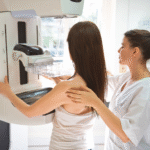
- Mammogram: The gold standard for early detection. Women ages 40–74 should have one every 1–2 years.
- Breast MRI: Often used in high-risk women alongside mammography.
- Clinical breast exam: A physical check by a healthcare provider.
- Self-awareness: Knowing how your breasts normally look and feel makes it easier to spot changes.
The earlier cancer is found, the simpler the treatment — and the better the outcome.
Modern Treatment Options
Treatment depends on the type and stage of breast cancer, as well as genetic and hormonal factors. Common options include:
1. Surgery
- Lumpectomy: Removes the tumor and a small margin of surrounding tissue.
- Mastectomy: Removes one or both breasts, depending on the spread.
2. Radiation Therapy
Destroys remaining cancer cells after surgery to prevent recurrence.
3. Chemotherapy
Targets fast-growing cancer cells throughout the body — often used before or after surgery.
4. Hormone Therapy
Blocks hormones (like estrogen or progesterone) that fuel certain cancers.
5. Targeted Therapy
Drugs like Herceptin (trastuzumab) specifically attack HER2-positive breast cancers, improving survival rates.
6. Immunotherapy
Boosts the body’s immune response to recognize and destroy cancer cells.
Today, oncologists often combine several of these treatments to personalize care — a powerful shift toward precision medicine that’s improving outcomes for millions.
Healthy Lifestyle, Lower Risk
While no lifestyle can guarantee prevention, research shows several habits can help lower risk:
- Maintain a healthy weight
- Exercise regularly — even brisk walking helps
- Limit alcohol intake
- Eat a balanced, plant-forward diet
- Avoid smoking
- Get regular checkups and follow screening schedules
Even small changes add up over time — and they help your overall health, not just your cancer risk.
When to Talk to Your Doctor
If you notice a lump, nipple discharge, or any skin change that feels “off,” schedule an appointment — even if your last mammogram was clear.
It’s always better to check and know for sure.
Trust your instincts. You know your body best — and speaking up early can save your life.
Key Takeaways
- 1 in 8 women will face breast cancer in her lifetime — but early detection changes everything.
- Watch for new lumps, nipple changes, or unusual breast symptoms.
- Mammograms remain the best screening tool for early detection.
- Treatment options now include surgery, radiation, targeted therapy, and immunotherapy.
- Living healthy and staying consistent with screenings are your strongest defenses.